How to Align Your Brand Visuals Across Website and Social Media
summary
Your website and social media shouldn’t feel like two different businesses.
When your brand visuals don’t align across platforms, you create confusion — and confusion weakens trust. Research shows that consistent brand presentation strengthens recognition and improves performance.
In this article, you’ll learn:
I see this constantly.
A business has:
- A polished website
- A half-put-together Instagram
- A completely different vibe on LinkedIn
Individually? Fine.
Together? Confusing.
And confusion kills trust.
Research from Marq’s Brand Consistency Report (formerly Lucidpress) shows that brands presenting themselves consistently across platforms are more likely to see measurable revenue growth.
That’s not aesthetic preference.
That’s performance.
Your website is your authority hub. Your social media is your attention engine. If they don’t look like they belong together, you look scattered. And scattered doesn’t convert.
Why this actually matters
Humans trust what feels familiar.
Harvard Business Review has written about the power of familiarity and cognitive fluency. We naturally prefer things that are easier to process and recognize. When something feels consistent, it feels safer.
From a usability standpoint, Nielsen Norman Group lists consistency and standards as one of the core usability principles because it reduces cognitive load and increases trust.
When your visuals are aligned, your brand feels stable.
When they’re not, your audience has to work harder to interpret you.
And when people have to work harder, they leave.
Your brand is what other people say about you when you're not in the room.
If your website says one thing and your social says another, you’re handing them mixed messaging.
The 5 Things That Must Align
You don’t need everything identical.
You need a system.
Color Palette
Your core brand colors should show up in:
- Website buttons
- Section backgrounds
- Social graphics
- Story highlights
- Banners
Not random template colors.
Your brand colors.
Consistency strengthens recognition. Recognition strengthens recall. And recall influences preference — a concept supported by the Mere Exposure Effect in psychology (Zajonc, 1968).
🧠 Takeaway
Recognition builds confidence.
Confidence gets you hired.
Typography
You don’t have to use the exact same fonts everywhere.
But your visual tone needs to match.
If your site feels:
- Structured
- Modern
- Clean
- Intentional
Your Instagram shouldn’t feel like a scrapbook of trending scripts.
Typography communicates personality faster than you think.
Keep it cohesive.
Photography Style
This is where brands quietly break.
If your website uses:
- Professional imagery
- Consistent editing
- Clean composition
But your social feed is:
- Dark phone photos
- Different filters every week
- Random cropping
You create subconscious doubt.
Not because people are judging you line by line.
But because the brand doesn’t feel stable.
Edelman’s annual Trust Barometer consistently shows that trust is a deciding factor in brand choice. When your visuals feel inconsistent, you weaken that trust signal.
Voice + Messaging
Visual alignment includes tone.
If your website says:
- Strategic
- Results-driven
- Refined
But your Instagram sounds chaotic and unserious, you’re weakening your own positioning.
Tone can flex slightly by platform.
It should never contradict your authority.
Graphic Style
Ask yourself:
- Are you minimal and spacious?
- Bold and layered?
- Editorial and structured?
- Illustrated and playful?
- Pick a direction.
Your homepage shouldn’t feel architectural while your social feels cluttered and impulsive.
What Happens When You Don’t Align
You unintentionally signal:
- “We’re still figuring it out.”
- “This was pieced together.”
- “There isn’t a real system here.”
Established brands don’t look accidental.
They look intentional.
Consistency reduces cognitive load.
Reduced cognitive load increases clarity.
Clarity increases trust.
What Happens When You Don’t Align
Not Instagram.
Not Canva templates.
Not trending reels.
Your website should be your source of truth.
It defines:
- Typography hierarchy
- Button styling
- Spacing rules
- Color usage
- Image direction
- Brand tone
Social media should extend that system, not reinvent it every week.
If your website doesn’t feel cohesive yet, fix that first.
That’s exactly why I created Website in a Week — to build a structured, aligned brand foundation fast instead of letting visuals evolve randomly over time.
Because once the website is solid, social becomes easier.
- Cleaner.
- More consistent.
- And way less stressful.
Practical Steps to Align Web + Social
You don’t need a full rebrand.
You need clarity.
Audit Side by Side
Open:
- Your homepage
- Your Instagram grid
- Your LinkedIn banner
Ask:
- Do these feel like the same company?
- Would a stranger recognize this as one brand?
If not, write down what feels off.
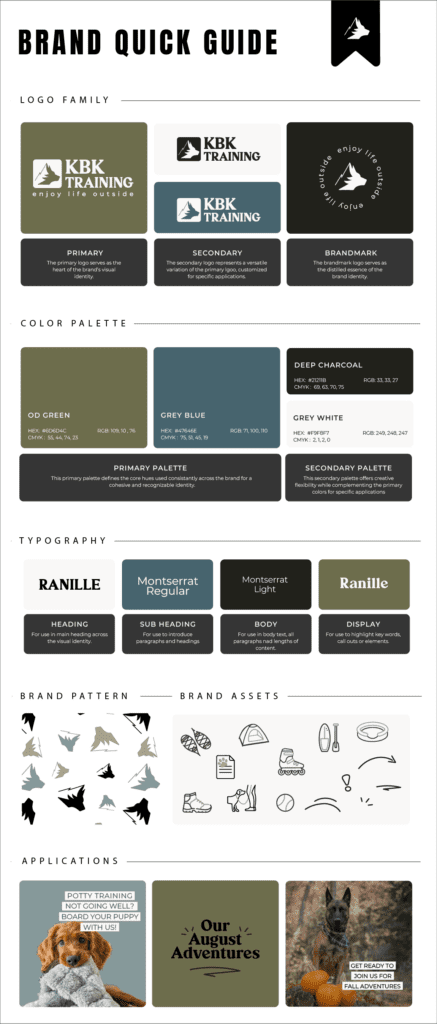
Define a Mini Brand System
Create a simple reference document with:
- 2–3 primary brand colors
- 1–2 headline styles
- 1 body font
- 1 photography direction
- 1–2 repeating layout structures
It doesn’t have to be fancy.
It just has to exist.
Plan Visually (Not Randomly)
If you’re posting blindly, your brand will look blind.
Use a structured tool like Plann so you can:
- Preview your feed before publishing
- Maintain color balance
- See visual repetition
- Plan layout intentionally
When you can see your grid ahead of time, cohesion improves dramatically.
Standardize Templates
Instead of redesigning graphics every week:
- Create 3–5 branded templates
- Lock in spacing
- Repeat layouts
- Repetition strengthens recognition.
Recognition strengthens trust.
Practice Creative Restraint
Not every trend fits your brand.
Not every template belongs in your ecosystem.
Just because something is popular doesn’t mean it’s aligned.
The bottom Line
Your website builds authority.
Your social builds familiarity.
When they align?
You build momentum.
When they don’t?
You dilute trust.
Alignment isn’t about perfection.
It’s about clarity.
And clarity converts.
Your brand shouldn’t feel pieced together.
If your website isn’t acting as the clear foundation for everything else, fix that first.
Website in a Week is my structured process for building a cohesive, conversion-focused brand foundation…fast.